
Interview Best Practices, Part 1: How to Prepare Like a Pro
Interviews can feel intimidating, especially when you really want the opportunity. The good news is this: confidence doesn’t come from luck. It comes from preparation.
Whether you’re interviewing for a job, internship, leadership role, or student organization, the work you do before the interview sets the tone for everything that follows. When you prepare intentionally, nerves quiet down, your answers feel more natural, and you walk in ready to show up as your best self.
Here’s how to prepare like a pro.
1. Start With the Basics (They Matter More Than You Think)
Preparation begins earlier than most people realize.
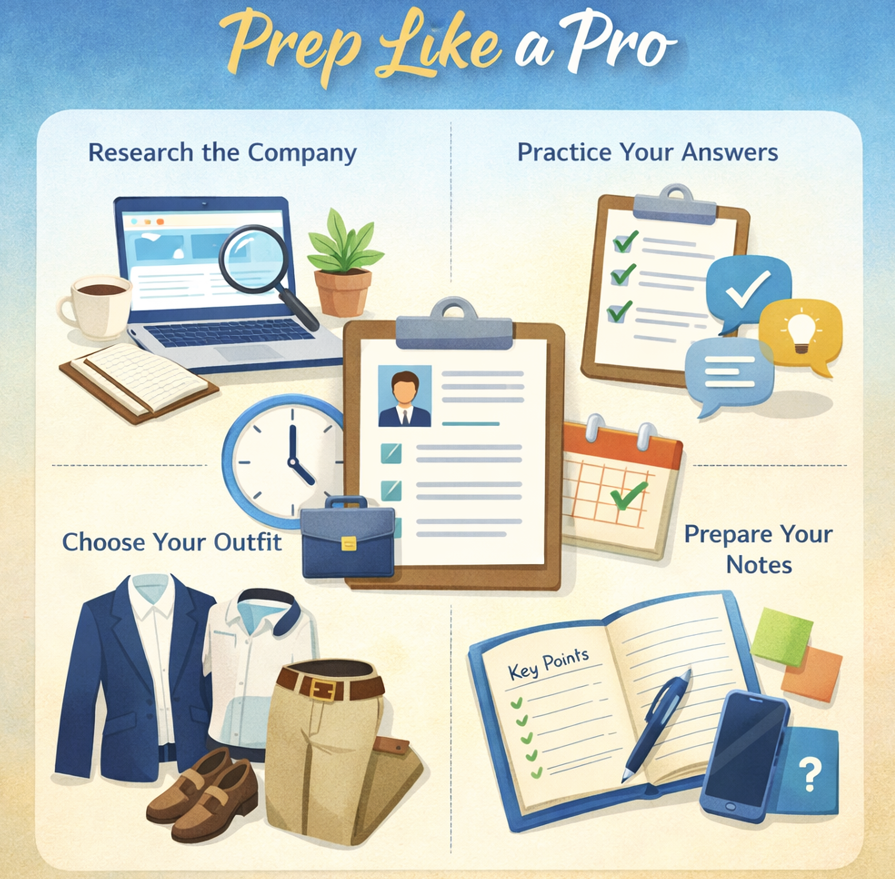
Pick out your outfit ahead of time so you’re not scrambling the day of. Choose something professional, comfortable, and appropriate for the role or organization. When you feel good in what you’re wearing, it shows.
Next, get your logistics locked in:
Know where the interview is and how you’ll get there
Confirm the time, format, and who you’ll be meeting with
Plan to arrive early so you’re not rushed
These small details reduce stress and free up mental space for what really matters.
2. Research the Organization (Beyond the Surface Level)
One of the biggest signals interviewers look for is genuine interest. That means doing more than skimming a website five minutes before you walk in.
Spend time learning about:
The organization’s mission and values
Leadership or members involved
Their culture and community involvement
Recent projects, initiatives, or events
As you research, ask yourself: Why does this organization actually appeal to me? The clearer that answer is, the easier it will be to articulate during the interview.
3. Predict the Questions and Prep Your Stories
You don’t need to memorize answers, but you do need a plan.
Most interviews rely heavily on behavioral questions like:
Tell me about yourself
Tell me about a time you worked on a team
Tell me about a challenge you faced
Describe a leadership experience
Instead of preparing a different story for every question, identify two to three strong scenarios from your experiences. One good story can often be adapted to answer multiple questions.
Think about examples from:
Classes or group projects
Part-time jobs or internships
Clubs, organizations, or sports
Volunteering or community involvement
Personal growth moments
Your goal is to walk in knowing which stories you can pull from, no matter how the question is phrased.
4. Know What Interviewers Are Really Listening For
When interviewers ask questions, they’re listening for more than just the content of your answer.
They’re paying attention to:
Clarity and confidence in how you speak
Self-awareness about your strengths and interests
Connection to the organization and its values
Motivation and intent behind your choices
Your ability to tell a clear story without rambling
Preparation helps you stay focused, concise, and confident when it’s your turn to talk.
5. Prepare Your “Tell Me About Yourself” Answer
This question often comes early, and it sets the tone for the entire interview. Having a polished response ready is one of the best ways to feel grounded from the start.
A simple 30-second framework looks like this:
“I’m a [year in school or role] focused on [area of interest]. I enjoy [a key strength or activity], which I’ve developed through [a class, job, or experience]. I’m interested in this organization because [specific connection], and I’m excited about the opportunity to [grow, contribute, or get involved].”
Practice it out loud until it feels natural, not scripted.
6. Bring Notes (Yes, Really)
Bring a notebook with:
A few bullet points about the organization
Reminders of your key stories
Questions you might want to ask
This shows preparation, professionalism, and genuine interest. It also gives you something grounding to hold onto if nerves kick in.
Final Thought: Preparation Is Confidence in Disguise
You don’t need to be perfect to interview well. You just need to be prepared.
When you take the time to research, reflect on your experiences, and organize your thoughts, you walk into the interview with clarity and calm. That confidence is what interviewers remember.
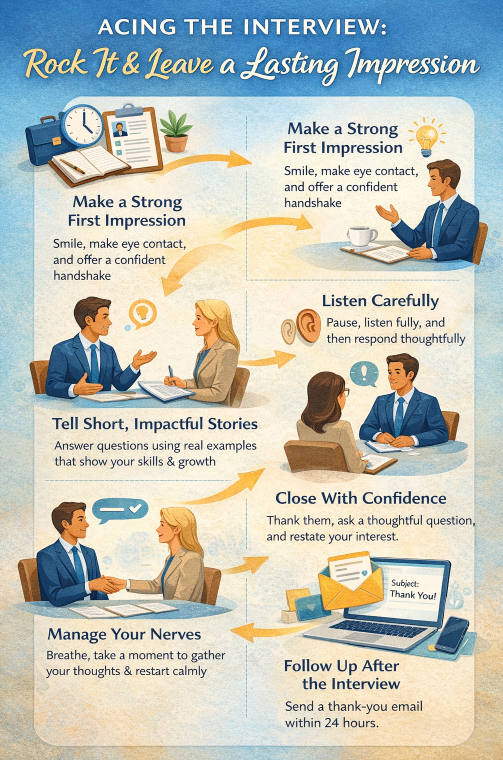
In Part 2, we’ll cover what happens once the interview starts, including how to answer questions using simple storytelling techniques, manage nerves in the moment, and leave a lasting impression.