
Interview Best Practices, Part 2: How to Rock the Interview and Leave a Lasting Impression
You’ve done the prep. You’ve researched the organization. You’ve practiced your stories. Now it’s time to walk into the interview and bring it all together.
This is where confidence, clarity, and connection matter most. The goal isn’t to be perfect—it’s to be present, thoughtful, and authentic.
Here’s how to rock the interview itself and leave an impression that lasts well beyond the final handshake.
Rocking the Interview Starts the Moment You Walk In
First impressions form quickly, and they’re shaped just as much by how you show up as what you say.
Start strong by:
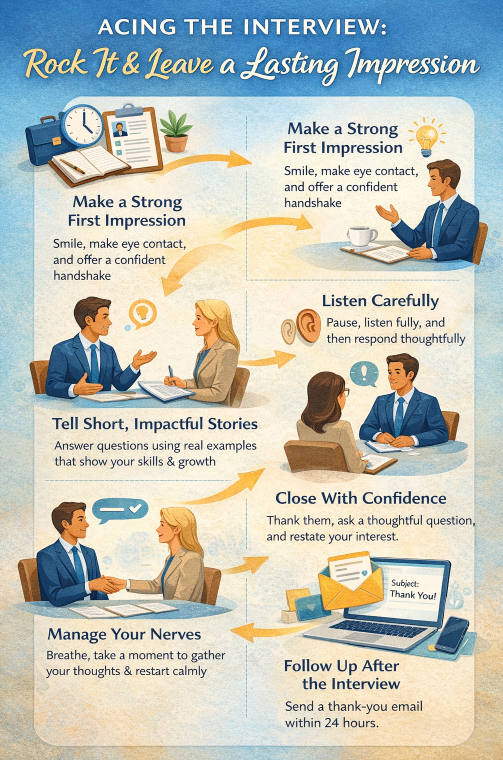
Smiling, making eye contact, and offering a confident handshake
Engaging in light conversation to ease into the interview
Being ready for an early question like, “Tell me about yourself and why you’re interested”
Keep your introduction concise—around 30 to 60 seconds—and let it set a confident, grounded tone for the conversation.
Listen First, Then Respond
One of the most overlooked interview skills is listening.
Before answering:
Let the interviewer finish the question
Take a brief pause to gather your thoughts
Answer what was actually asked, not what you wish they asked
This small pause shows confidence and thoughtfulness, not hesitation.
Use Short Stories, Not Long Explanations
Strong interview answers are built on real experiences, not long explanations.
Anchor your responses in:
Classes, jobs, clubs, sports, or leadership roles
What you did specifically
What you learned or how you grew
Aim to keep answers in the 30–60 second range. If the interviewer wants more detail, they’ll ask.
Manage Nerves With Simple Resets
Nerves are normal. Even experienced professionals feel them.
If you get stuck:
Take a breath
Say, “Let me think about that for a second”
Restart calmly if you lose your train of thought
Confidence isn’t about never feeling nervous—it’s about knowing how to recover smoothly.
Close the Interview With Confidence and Curiosity
How you end the interview matters just as much as how you begin.
Before you wrap up:
Thank the interviewer for their time
Ask at least one thoughtful question
Restate your interest in the role or organization
Questions like these show curiosity and engagement:
What has been the most valuable part of your experience here?
How do members support each other academically or professionally?
How would you describe the culture of the organization?
Practice a Strong Wrap-Up Statement
Having a closing statement prepared helps you finish with clarity and confidence.
A simple example:
“Thank you so much for taking the time to speak with me today. I really enjoyed learning more about the organization and hearing your perspective. I’d love the opportunity to contribute and grow here.”
This reinforces interest and leaves the conversation on a positive, professional note.
Follow Up Within 24 Hours
The interview isn’t over when you walk out the door.
Within 24 hours:
Send a short thank-you email or LinkedIn message
Express appreciation for their time
Reference something specific from the conversation
A thoughtful follow-up reinforces professionalism and keeps you top of mind.
Final Takeaway: Confidence Is Built in Layers
Preparation helps calm nerves. Clear stories build confidence. A thoughtful close creates connection.
When you combine all three, you don’t just interview well—you interview memorably.
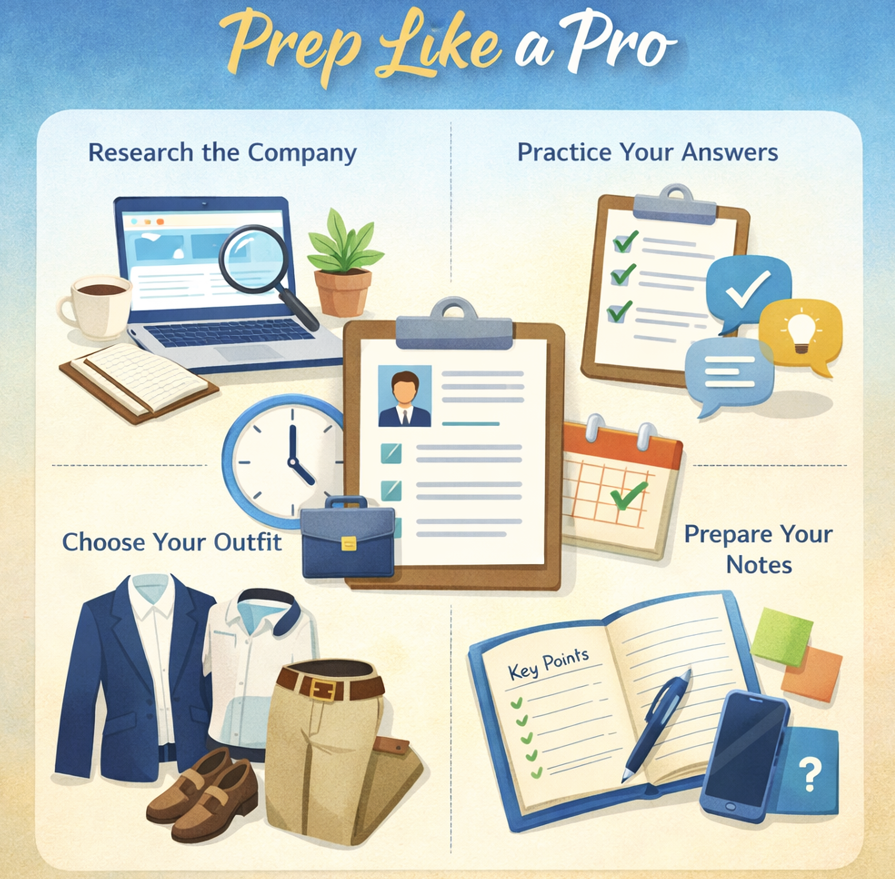
If you haven’t read Part 1: How to Prepare for an Interview, start there. Together, these two posts give you a complete roadmap for showing up with confidence, clarity, and intention in any interview.